Have you ever noticed that a perfume you loved on a friend smells completely different when you wear it yourself? This isn't your imagination—it's a fascinating combination of chemistry, biology and environmental factors. The same fragrance can develop uniquely on each person's skin, creating a scent experience that is truly personal.
The Science Behind Fragrance and Skin
When you spray perfume, you're not smelling the fragrance alone. You're experiencing the interaction between the perfume's ingredients and your body's natural chemistry. This interaction influences how the scent develops, projects and lasts throughout the day.
Skin Chemistry Matters
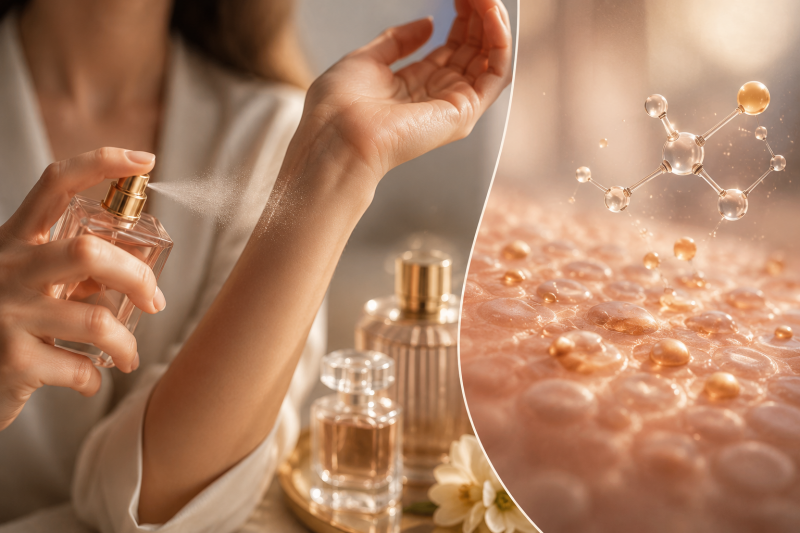
Every person's skin has a unique chemical composition. Factors such as pH levels, natural oils and moisture content affect how fragrance molecules react once applied.
- Oily skin tends to hold fragrances longer and can amplify certain notes.
- Dry skin may cause fragrances to evaporate more quickly, making them seem lighter or less intense.
- Skin pH can subtly alter the balance of fragrance notes, making some ingredients stand out more than others.
Body Temperature Influences Scent
Heat helps perfume evaporate and release its aromatic compounds.
People with naturally warmer body temperatures often find that:
- Their fragrances project more strongly.
- Certain notes, especially florals and spices become more pronounced.
- Perfumes may evolve faster throughout the day.
This is why a fragrance may smell richer and more intense on one person than another.
Natural Body Odor Plays a Role
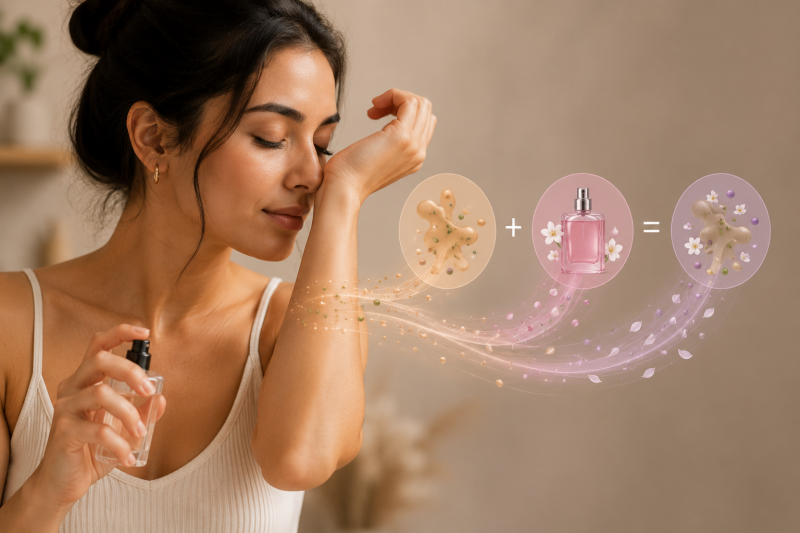
Everyone has a unique natural scent created by genetics, diet, hormones, and skin bacteria. Perfume blends with this natural odor, producing a personalized fragrance profile.
For example:
- Sweet fragrances may become creamier on some individuals.
- Woody fragrances may appear warmer or smokier on others.
- Citrus scents may smell brighter or sharper depending on skin chemistry.
Advertisement
Diet and Lifestyle Can Affect Fragrance
What you eat and how you live can subtly influence how a perfume smells.
Factors include:
- Spicy foods
- Garlic and onions
- Alcohol consumption
- Smoking
- Hydration levels
- Stress
These elements can alter body chemistry and affect the way fragrance notes interact with your skin.
Hormones and Age Impact Perfume Performance
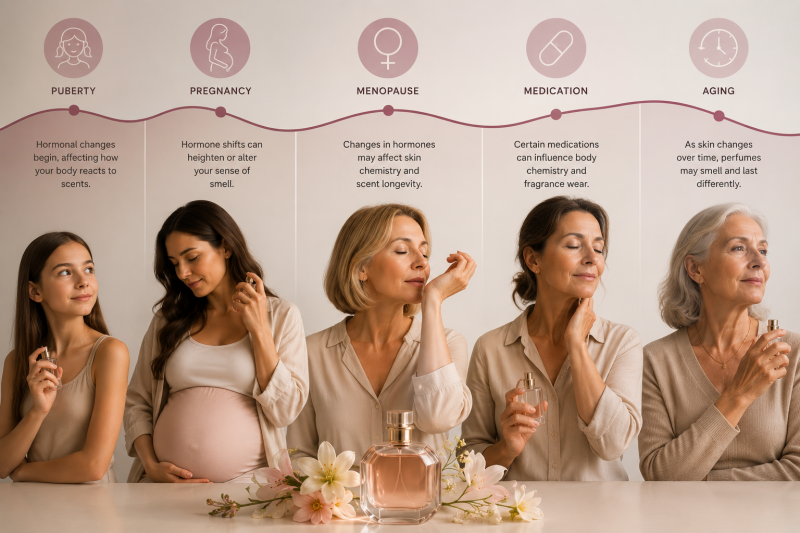
Hormonal fluctuations can change how fragrances smell and perform.
Common influences include:
- Puberty
- Pregnancy
- Menopause
- Medication use
- Aging
As skin changes over time, fragrances may develop differently than they did years earlier.
Advertisement
Climate and Environment Matter
External conditions also shape your fragrance experience.
Humid Weather
- Enhances fragrance projection.
- Often makes sweet and floral notes feel stronger.
Cold Weather
- Slows evaporation.
- Can mute certain top notes while emphasizing deeper base notes.
Dry Environments
- May shorten fragrance longevity.
Fragrance Composition Changes Over Time
Perfumes are built in layers:
- Top Notes: The initial impression after spraying.
- Heart Notes: The core character of the fragrance.
- Base Notes: The long-lasting foundation.
Because skin chemistry affects evaporation rates, these layers unfold differently from person to person. A vanilla note may emerge quickly on one individual while remaining subtle on another.
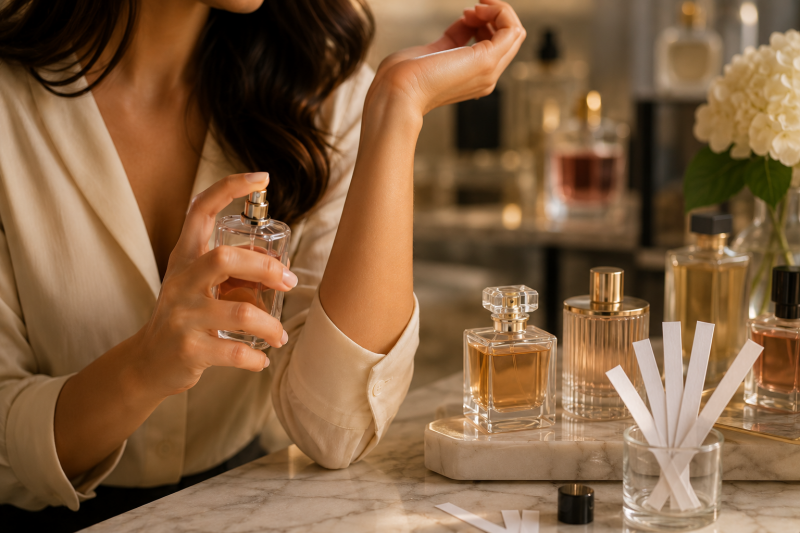
How to Test a Perfume Properly
To understand how a fragrance truly smells on you:
- Spray it directly on your skin.
- Avoid rubbing your wrists together.
- Wait at least 30 minutes for the fragrance to develop.
- Wear it for a full day before making a decision.
- Compare it with how it smells on a test strip.
A perfume's true character often reveals itself only after it has interacted with your skin for several hours.
Final Thoughts
Perfume is more than a blend of ingredients—it's a collaboration between the fragrance and the wearer. Skin chemistry, body temperature, lifestyle, hormones and environment all contribute to how a scent develops. That's why a fragrance can smell amazing on one person and completely different on another.
The next time you're shopping for a new perfume, remember: the best way to judge a fragrance isn't by how it smells on someone else—it's by how it smells on you. Your skin creates a version of the fragrance that no one else can exactly replicate.
Advertisement
Add comment
Comments