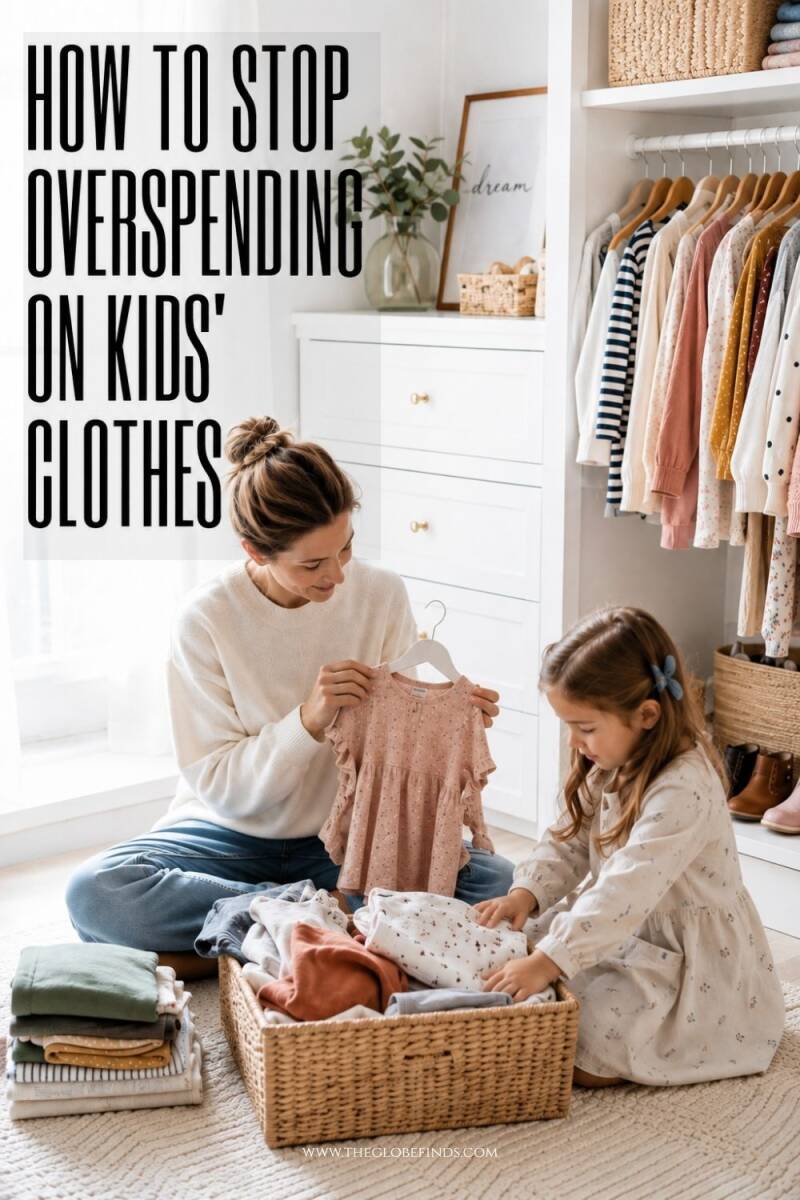
Kids grow quickly, their preferences change constantly, and somehow their closets always seem to need something new. Between seasonal changes, school clothes, shoes, special occasions, and those tempting sales, it can be surprisingly easy to spend more on kids’ clothing than you planned. The good news? You don't need to stop buying cute clothes. You just need a smarter system.
Here are 12 practical ways to spend less on kids’ clothes without making their wardrobe boring or impractical.
1. Check the Closet Before You Shop
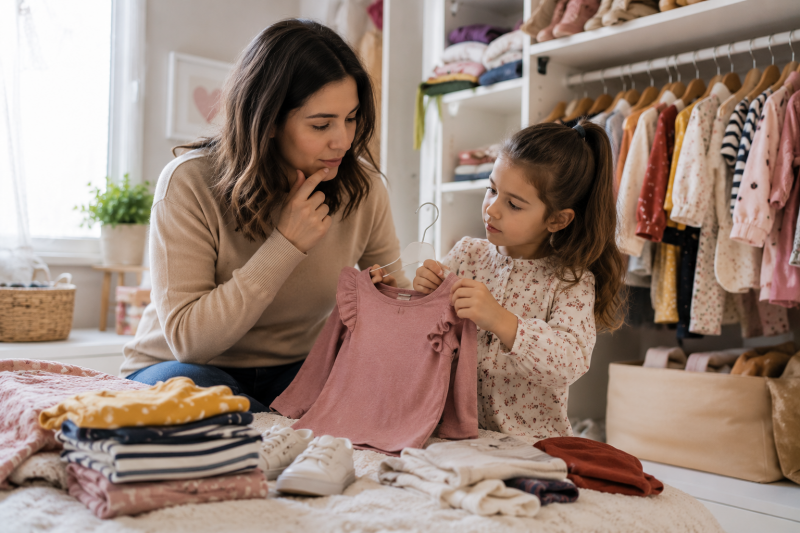
Before buying anything, take a quick inventory.
Look for:
- Clothes that still fit
- Items your child has barely worn
- Clothing that needs replacing
- Seasonal pieces they already own
- Shoes that still fit
- Basics they're actually running out of
This simple step can prevent buying a fourth pair of black leggings when three are already sitting in the drawer.
2. Make a Shopping List
Instead of browsing clothing websites whenever there's a sale, keep a running list of what your child genuinely needs. For example:
School
- 2 pairs of pants
- 3 everyday tops
- 1 hoodie
Seasonal
- Rain jacket
- Warm sweater
- Winter boots
When you shop with a list, it's much easier to distinguish “I need this” from “This is cute.”
3. Don't Shop for the Next Five Sizes
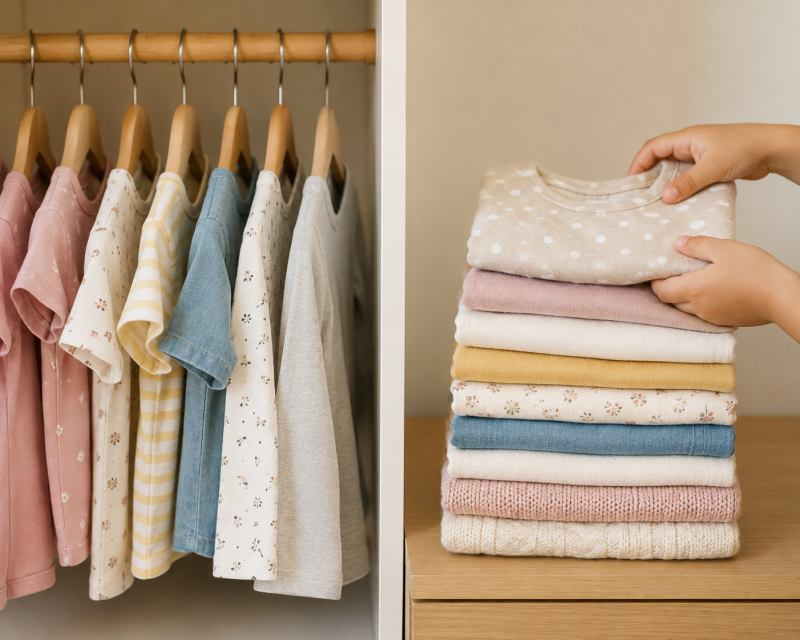
It can be tempting to buy larger sizes because children grow so quickly.
But buying too far ahead can backfire. Your child's growth may not happen exactly as expected, and styles or preferences can change before they ever wear the clothes.
Buying ahead can make sense for certain basics, but avoid turning your child's closet into a storage area for clothes they may wear years from now.
4. Build Around Mix-and-Match Basics
A smaller wardrobe can create many more outfits when the pieces work together.
Think:
- Neutral pants
- Simple T-shirts
- Comfortable sweaters
- Basic leggings
- Versatile jackets
- Everyday sneakers
Then add a few fun pieces for personality.
You don't need 20 completely different outfits when several tops can work with the same few bottoms.
5. Don't Let Sales Trick You
A 50% discount isn't saving money if you didn't need the item.
Ask yourself: “Would I buy this at full price if it weren't on sale?”
If the answer is no, the discount may simply be encouraging you to spend money you weren't planning to spend.
6. Buy More Carefully for Special Occasions
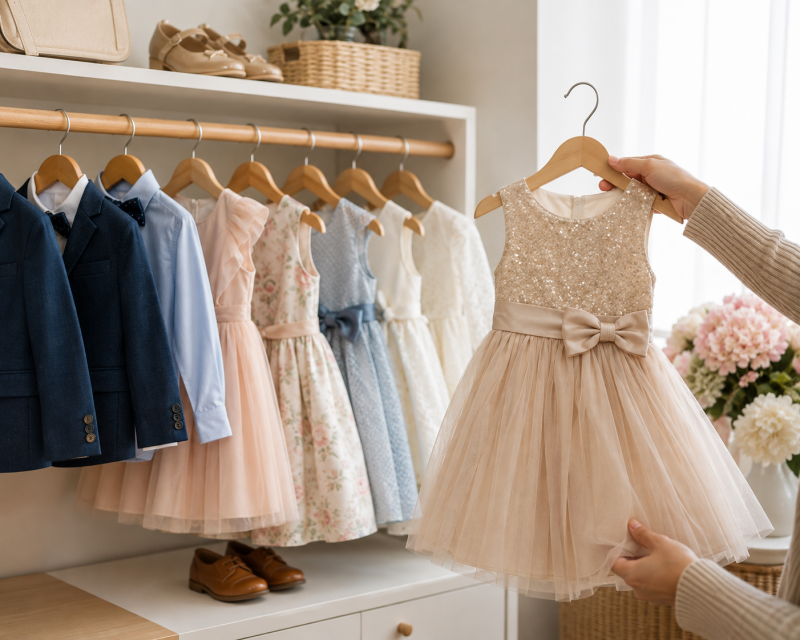
Kids often need outfits for weddings, holidays, birthdays, school performances or family photos.
Instead of buying a completely new outfit every time, look for pieces that can be reused.
A nice shirt can work for a family event and later become part of a school outfit. A dress can be paired with different shoes or accessories for a completely different look.
7. Shop Secondhand
Kids can outgrow clothing long before it looks worn out. That's why secondhand shopping can be particularly useful for:
- Jackets
- Sweaters
- Jeans
- Occasion clothing
- Sportswear
- Shoes that have barely been worn
Check local resale stores, consignment shops, community groups, and clothing swaps.
8. Be Selective About Trendy Pieces
Children's fashion trends can change quickly.
Rather than filling the closet with every trending color, character, or style, buy a few pieces your child genuinely loves and keep the rest of the wardrobe versatile.
This can also make getting dressed easier because everything has something to pair with.
9. Take Care of What You Already Own
One of the easiest ways to save money is to make existing clothes last longer. Teach kids simple habits such as:
- Putting dirty clothes in the hamper
- Hanging up jackets
- Keeping shoes together
- Not wearing outdoor shoes indoors
- Treating stains quickly
- Following washing instructions
Small habits can help extend the life of clothing.
10. Don't Replace Something Just Because It's Not Perfect
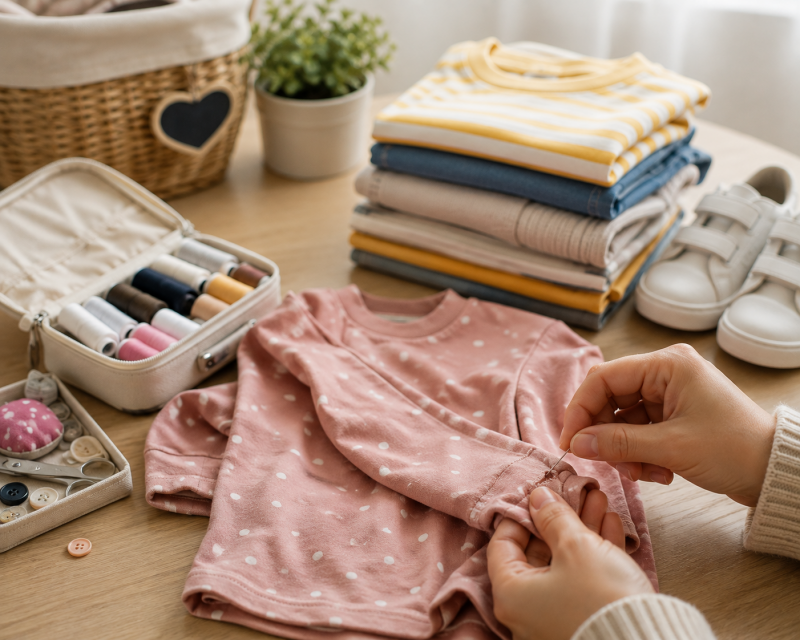
A tiny stain, loose thread, missing button, or small tear doesn't necessarily mean an item needs to be thrown away.
Learn a few simple repairs or keep a small sewing kit handy.
Replacing a button can cost almost nothing compared with buying a completely new shirt.
11. Set a Monthly Clothing Budget
Give children's clothing its own category in your family budget. For example:
Monthly kids' clothing budget: $100
If you don't need anything that month, don't feel obligated to spend it.
You can allow the money to accumulate for larger seasonal expenses such as winter coats or school shoes.
12. Create a “One In, One Out” Rule
When your child's closet is getting crowded, try this simple rule:
One new item comes in → one old item goes out. The outgoing item can be:
- Donated
- Sold
- Handed down
- Recycled if it's no longer wearable
This keeps the wardrobe under control and makes you think twice before adding unnecessary pieces.
A Simple Rule Before Every Clothing Purchase
Before clicking “Add to Cart,” ask these five questions:
1. Does my child need it?
2. Do they already own something similar?
3. Can I create at least three outfits with it?
4. Will they realistically wear it often?
5. Would I still buy it without the sale?
If you can answer yes to most of them, it's probably a worthwhile purchase.
The Bottom Line
Saving money on kids' clothes isn't about buying the cheapest items or never treating your child to something special. It's about buying intentionally, using what you already have, and avoiding purchases that end up sitting untouched in the closet.
A smaller, thoughtfully planned wardrobe can actually make mornings easier—and leave more money in your family budget for the things that matter.
Keywords: how to stop overspending on kids clothes, how to save money on kids clothes, kids clothing budget, kids clothes on a budget, affordable kids clothes, budget friendly kids clothing, ways to save money on kids clothes, smart shopping for kids clothes, kids clothing shopping tips, kids wardrobe on a budget, minimalist kids wardrobe, kids capsule wardrobe, kids capsule wardrobe on a budget, affordable children’s clothing, cheap kids clothes, budget kids clothing ideas, how to shop for kids clothes, kids clothes shopping tips, save money shopping for kids, money saving tips for parents, parenting money saving tips, family budget tips, family budgeting ideas, frugal parenting tips, frugal kids clothing, frugal family living, kids clothing essentials, kids wardrobe essentials.
Add comment
Comments